


In geography, schools teach about the line that divides the Earth into two halves, or the equatorial belt, known as “Equateur” in foreign languages.
This line or belt is also known as “0°” because it divides the Earth into two halves, creating the Northern Hemisphere (Hemisphère Nord) and the Southern Hemisphere (Hemisphère Sud).
This equatorial belt is known for its breathtaking beauty, where diverse wildlife and rich cultures continue to attract tourists from all over the world. However, the heat from the Equator prevents this beauty from dominating because that heat causes serious diseases, including malaria and epidemic diseases originating from animals.
In the past, the solution was difficult as it delayed necessary travel and led to the closure of borders, causing the economy to suffer. But now, there is a new shift for some of the countries located on this equatorial line.
Tourism experts, including Dr. Siya Aggrey, point out that using Information and Communication Technology (ICT) builds an efficient system to protect the public from diseases based on data, which is also a method that tracks diseases quickly without disrupting tourism.
Tourism as an Economic pillar in jeopardy.
Tourism is not just a phrase for countries on the equatorial belt; it is the backbone of the economy because it brings in foreign exchange used to build infrastructure, provides jobs to millions of citizens, and contributes to environmental conservation and protection.
It is well known that when an epidemic strikes, it spreads everywhere and faster than the diseases themselves, which is why borders are closed hastily.
Consequently, the impact devastates the citizens more than the disease, halting many jobs and disrupting environmental protection and conservation programs.
You Might Ask, How Can This Chain of Fear Be Stopped?
The main problem is the delay in detecting diseases through traditional, paper-based methods. By the time a cluster of patients is identified, the disease has already spread, forcing the government to choose to lock down the entire country. ICT technology stops this chain, replacing fear or rumors with true and specific data for each region. This is the first approach used to show that there is an epidemic before it turns into a national problem.
What are the Early Warning Systems?
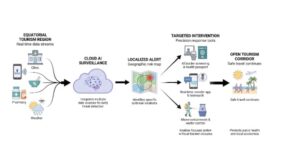
No other systems are used except those based on the “Cloud,” which are modern digital networks used to collect anonymous data from different places to create early warning systems. Machine Learning technology tracks the words people search for on the internet regarding disease symptoms, medicines sold in pharmacies, and the number of employee absences.
Following this is the connection of rural clinics based on internal national data through satellites, which enables leaders to quickly see where the epidemic has struck.
Furthermore, Artificial Intelligence (AI) uses climate change data to confirm that mosquito-borne diseases will increase a few weeks before patients even arrive at hospitals.
To identify exactly where the disease originated, the government closes only one area and gathers all the data first, while the main tourism routes further away continue to operate.
How Artificial Intelligence (AI) Monitors Borders Swiftly?
It is known that airports and borders are the main intersection between tourism and health sectors. In the past, this required long communication lines and paper records, causing people to gather together and increasing the risk of infection.
The new infrastructure uses specialized devices known as “infrared cameras” that measure the temperature of moving people without stopping them. Health passports verified by “Blockchain” allow tourists to send their vaccination documents and tests before traveling. This technology protects data privacy through “Zero-knowledge proofs”, which is a highly trusted method.
Emergency Networks and Real-Time Information Maps. Once tourists have entered, protecting them relies on proper communication instead of hiding information.
Government-approved phone apps use GIS to provide safety maps in real_ time. If a high number of mosquitoes is detected in a specific village, the app sends a message saying: “Wear mosquito nets or take an alternative route”. At the same time, specialized traps known as the “Internet of Things” (IoT) track mosquitoes in tourist hotels, immediately applying eco-friendly treatments before people sleep in those rooms.
Rapid Medical Response for Tourists
To protect and alleviate the concerns of tourists based on the capacity of international clinics, decentralized medical programs have been established. This gives tourists peace of mind and allows them to travel confidently even during an epidemic.
Telehealth information networks have also been established to address this issue by providing medical consultation over the phone for mild symptoms.
Rural hotel workers can send health metrics and test photos to urban hospitals to be verified by specialists. Sick guests are treated quickly where they are, local hospitals are not overwhelmed, and the fear of fleeing the country is reduced. A Solid Future Plan implementing these modern digital methods requires cooperation between the Ministry of Health, telecommunication companies, and the hospitality sector. It also requires strict data privacy protection laws to avoid misuse.
However, the benefit is clear in preventing frequent panic. By properly monitoring every location through technology, equatorial countries can protect the public health of tourists while continuing to keep their doors open to the whole world.
Karibumedia.rw
